A good mobile detailing service does more than wash a car in your driveway. When it is done well, the process reads like a careful inspection, a restoration session, and a protective treatment, all without your vehicle leaving home or the office. The best operators bring fully self-contained equipment, respect your property, and work with a clear plan that matches your car’s condition and your goals. If you have ever booked a service and received a quick splash-and-dash, you know the gap between a rinse and a real detail. Here is what a thorough, professional visit looks like from the inside.
What “mobile detailing” really covers
The term stretches across a wide spectrum. At the light end, it can mean a maintenance wash and interior vacuum, which is valuable if done correctly. At the heavy end, it can involve multi-stage paint correction, interior coating on high-touch surfaces, headlight restoration, and even ceramic coating applications that cure on-site. The service you need depends on how you use the vehicle, local climate, parking situation, and how long you want a treatment to last. For someone who parks outside under trees and commutes in stop-and-go traffic, a simple wash every few weeks will not touch embedded contaminants or brake dust building up on the wheels. For a garaged weekend car, the priority may be gloss and protection, not deep decontamination every month.
The advantage of mobile detailing is time and control. You choose the day and place. A skilled technician works around your schedule, not the other way around. The potential downside is space and weather, which shape what is possible. A windy day full of dust or an unexpected storm can force adjustments, especially with products like ceramic coatings that need a clean, stable environment to bond properly. Good operators anticipate this and plan for contingencies.
The first 10 minutes set the tone
A professional starts with a walkaround. Expect questions about problem spots, prior services, and your priorities. The tech will look at the paint in natural light for swirls, water spots, and overspray, check wheel faces and barrels for baked-on brake dust, and lift rubber floor mats to see what is living under there. They might point out tar specks on rocker panels, tree sap on the roof, or a previous poor repair that will limit how much correction is safe. You should also hear what will not be done that day, either because it is unnecessary or because it requires more time, like multi-stage paint correction on a heavily swirled black SUV.
A quick note on expectations. If a car has years of automatic-brush wash damage, a single-stage polish can hide or reduce a lot, but not everything. If you have matte paint, polishing is off the table altogether, and the service will center on decontamination and protection. The key is clarity, not miracles.
What a thorough exterior process includes
The exterior wash goes beyond a bucket and mitt. A strong routine typically follows a decontaminate, wash, and protect rhythm, adjusted to the condition of the vehicle.
- Pre-rinse and pre-wash: Loosen grit with low-pressure water, then a foam pre-soak to soften grime so the contact wash causes fewer micro-scratches. Contact wash: Two-bucket method, separate mitts for lower panels, and gentle agitation in tight areas like emblems and fuel doors. Decontamination: Iron remover on paint and wheels to dissolve ferrous fallout, clay bar or synthetic clay mitt to shear bonded contaminants, and tar removal as needed. Drying: Controlled airflow and clean towels, followed by a drying aid or spray sealant to reduce towel friction and add initial protection. Protection: Depending on the service, a polymer sealant, spray wax, or entry-level ceramic topper. True ceramic coating is a separate, more involved service.
Real-world example: a white truck with orange specks along the lower doors typically has rail dust or industrial fallout. You will see these spots turn purple with an iron remover. On heavy cases, two rounds are worth the time before claying. Skipping this step and going straight to clay will drag metal particles across the clear coat, which creates more marring than the service removes.
Wheels, tires, and that stubborn brake dust
Most vehicles show their age on the wheels first. Brake dust bakes to hot alloy, especially on performance pads. A methodical approach cleans the face, spokes, barrels, and behind the calipers, then treats the tires and wheel wells. A dedicated wheel brush for barrels and a soft detail brush for lug recesses prevents scratching. If the technician applies a wheel coating afterward, it buys you easier maintenance and slows down future staining. The same idea holds for tire dressing: water-based, satin finishes last well in daily use and avoid the sling you get from greasy gels.
If you drive through salted roads or leave an RV parked by the coast, corrosion pushes faster. Here, a wheel coating or frequent, careful wheel maintenance matters more than on a garaged sedan. The cost is higher than a basic clean, but the payoff is measured in time saved and less aggressive chemicals needed down the road.
Inside the cabin: more than vacuum lines
Interior work is where mobile detailing earns trust. The immediate results are obvious, but the details define quality. Expect a thorough vacuum with crevice tools, under-seat passes, and careful work around seat rails where coins, bobby pins, and the occasional door bolt hide. Hard surfaces are dusted, then cleaned with a pH-appropriate solution. Leather gets a separate cleaner and, if needed, a conditioner that does not leave a shiny, slippery finish.
Sticky cupholders often take more time than dashboards. Professional detailers sometimes heat the area lightly to soften residue, then extract with a small nozzle. On cloth seats, a spot treatment and hot-water extraction can lift salt rings and coffee stains, but pet hair is its own battle. Rubberized brushes, compressed air, and reusable hair-lifting pads all help, although heavily embedded hair can double the labor compared to a standard interior. On that note, an honest operator will tell you when an interior is too damp to drive immediately, especially after extraction. A few hours of airflow with doors open, weather permitting, protects against mildew.
If interior coating is on the table, the tech will first strip oils and contaminants from surfaces, then apply a thin protective layer to high-touch areas like center consoles, door pulls, steering wheels, and glossy black trim that scuffs easily. The benefit is reduced dye transfer, slower UV fading, and easier fingerprint cleanup, not a permanent shield against scuffs.
Paint correction: how much is wise
Paint correction is the careful removal of clear coat to level away defects, which increases gloss and clarity. There is no infinite buffer here, only a finite layer above the color coat. A responsible professional measures paint thickness with a gauge where possible and makes choices accordingly. On OEM paint, a single-stage polish can remove light swirls and haze, adding punch to metallic flake and depth to solid colors. If the defects are deeper, a two-stage cut and polish might be offered. The leap in time from single to two-stage is significant, and the gains follow a rule of diminishing returns after a point.
An experienced detailer also respects edges, body lines, and repainted panels, which can vary in hardness and thickness. On soft Japanese clears, a mild polish can bite deeper than expected. On hard German clears, the same pad may barely move a defect. The craft lies in pairing pads, polishes, machine speed, and pressure to the paint in front of you, not a chart. If a detailer tells you that a gnarly scratch through to the base coat needs repaint, that is a sign of prudence, not a sales dodge.
Ceramic coating, wheel coating, and realistic durability
Ceramic coating has earned a mix of loyal fans and overinflated claims. The truth lands between. A professional-grade ceramic coating bonds to properly prepared paint and wheels, adds measurable chemical resistance, rich gloss, and excellent hydrophobics, and makes wash maintenance easier. It does not stop rock chips, it does not end the need to wash, and it does not survive neglect. Cure times vary, but expect a careful wipe-down phase where high spots are leveled before they dry, then a period during which the vehicle must stay dry and dust-free.
Wheel coating is a smart companion on cars with heavy brake dust. The heat resistance of purpose-made wheel coatings helps more than using a body-panel coating on wheels. If you drive a performance EV with aggressive regen and big calipers, you will notice the maintenance gain right away.
For daily drivers that live outdoors, a one to two year coating can be a sweet spot. For an enthusiast vehicle, a longer-term product with occasional topper applications keeps the finish lively. The big win with ceramic is time. Rinsing becomes more effective, dirt bonds less, and drying takes fewer towels. On a neglected surface, you will not see those benefits fully. Preparation remains everything.
Headlight restoration that does not fade in three months
Cloudy headlights come from UV-damaged polycarbonate, not dirt on the outside. A durable restoration starts with sanding to remove oxidized layers, then machine refinement, then a proper UV-stable coating. If a service skips to polishing only, the haze will return quickly. Also note that interior condensation or cracked seals are separate problems, and no polishing will keep moisture out. If you drive a lot at night or park outside, a restored, coated lens has both safety and cosmetic benefits.
RV detailing, marine detailing, and the challenges of size and environment
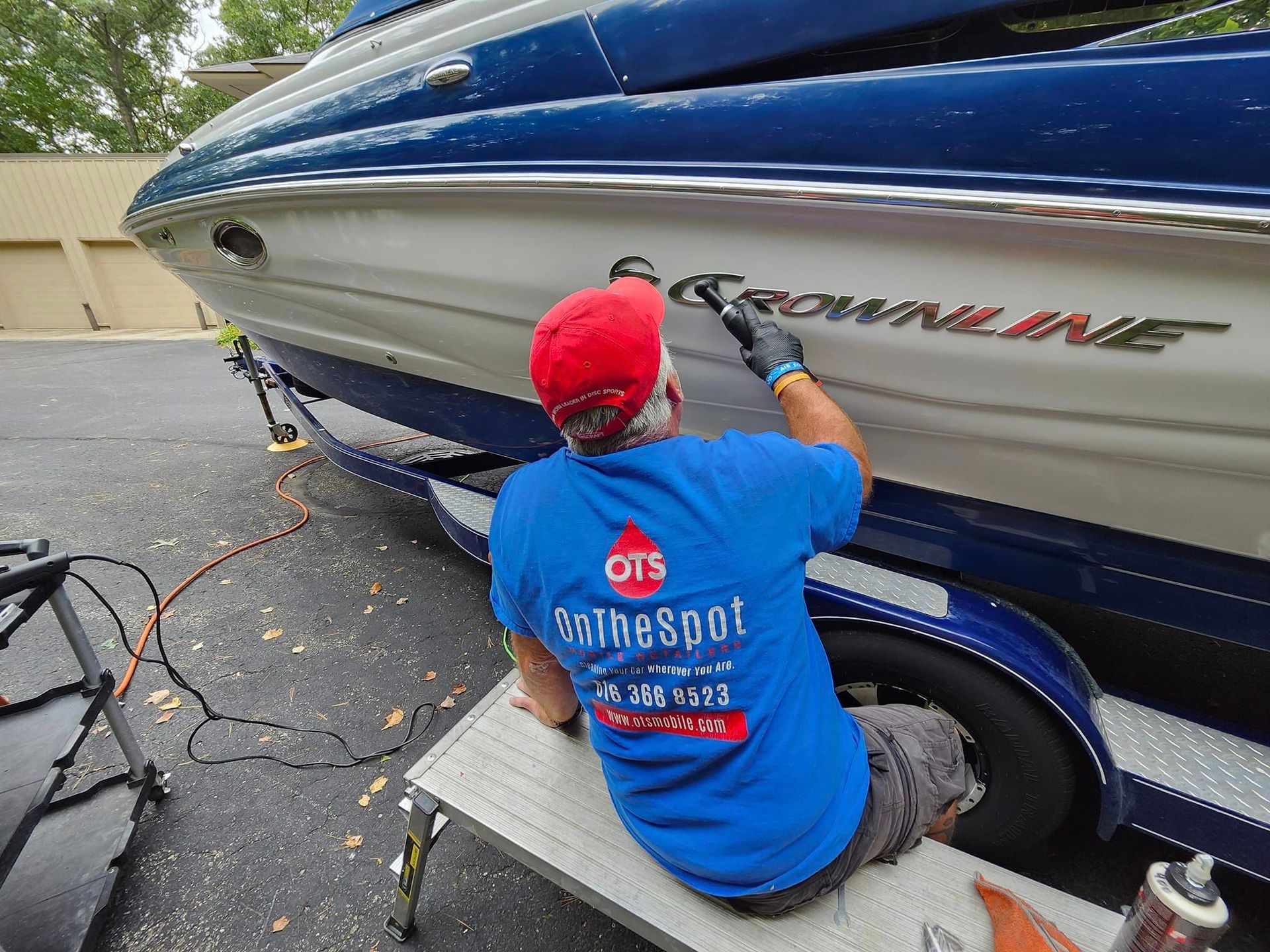
Detailing a 40-foot RV or a center-console fishing boat is a different sport from a compact sedan. Gelcoat on boats oxidizes faster than automotive clear coat, and the panels are huge. Polishing requires larger pads, extended reach, and lots of patience. Salt accelerates corrosion, and hardware attracts staining. A mobile team that takes on marine detailing or RV detailing has to plan water access, staging, and safety differently. For a boat on a trailer, the work may be done in a driveway, but when a vessel sits in a marina, permissions and shore power come into play.
For RVs, roof maintenance is often ignored. EPDM and TPO roofs collect chalk and debris, which then streaks down the sides. A thorough wash includes roof work, window gasket cleaning, and attention to storage bay seals. Protective products for gelcoat and fiberglass differ from those for automotive paint. A durable marine sealant buys you weeks, not years, when exposed to sun, salt, and dock grime, so maintenance intervals need planning.
Residential coating and what that term actually means
You might hear “residential coating” used in two ways. Some providers mean coatings done at your residence, as opposed to bringing the car to a studio. Others refer to a family of ceramic products tuned for driveway application with less stringent environmental controls. The second type generally has shorter open times and slightly lower solids content, which makes them more forgiving in variable conditions. A professional will choose a product that balances performance with the realities of your parking space and weather that day. If the forecast hints at rain or a dust storm, rescheduling a coating is the right move.
On the Spot Mobile Detailers in the real world: operations that matter
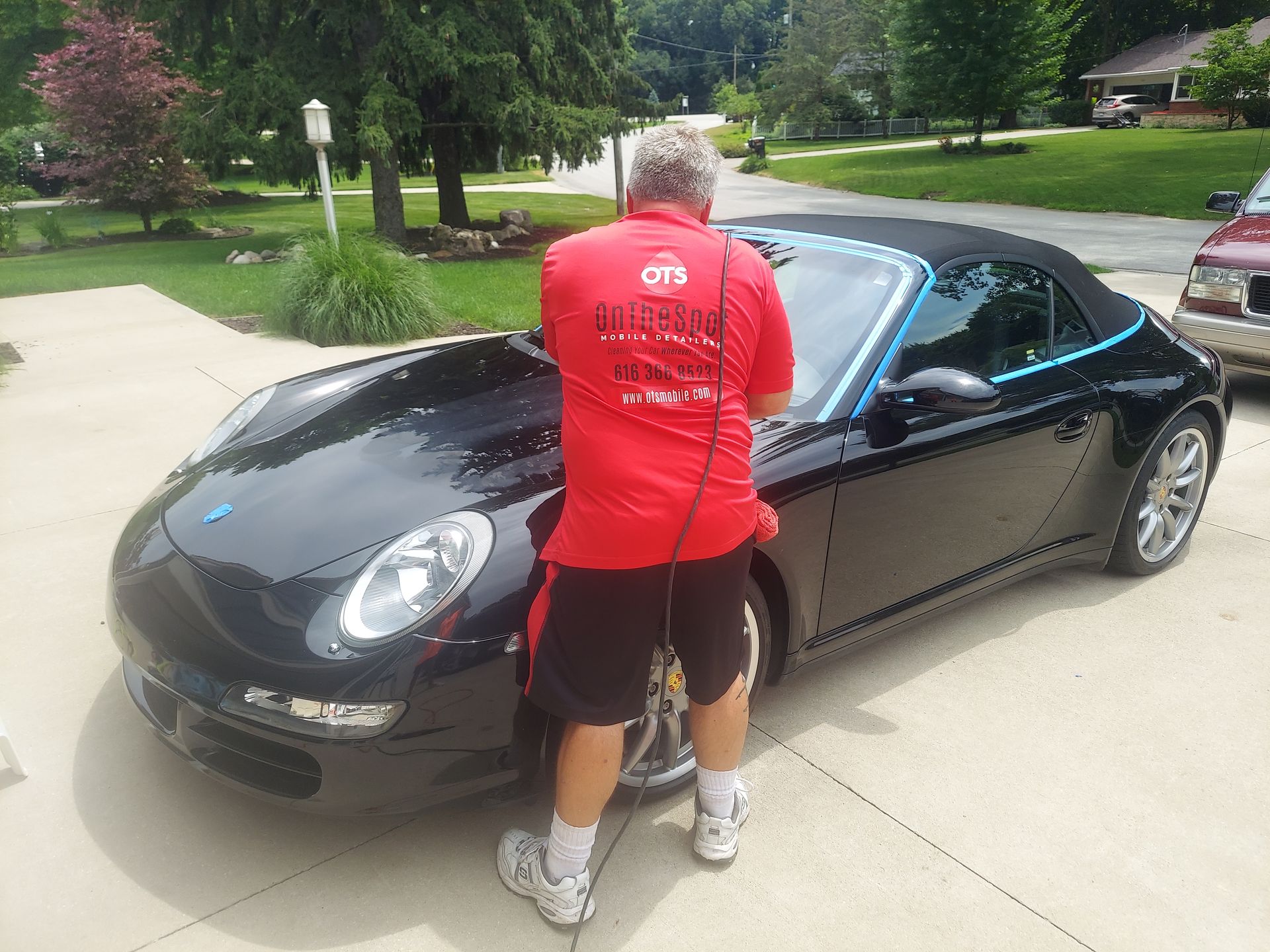
On the Spot Mobile Detailers approaches mobile detailing as a field operation, not an improvised wash. The team arrives with a self-contained water supply, filtration, and a generator or battery system for polishers and extraction tools. That matters in neighborhoods with water restrictions or where exterior outlets are limited. The crew allocates time blocks based on vehicle size and condition, not a flat thirty-minute slot for every job. On black paint with visible swirls, they often add a test spot early, then decide whether a single-stage polish will meet the goal or if a more aggressive approach is sensible. That conversation happens on the driveway, not at the end of the job.
If you are in an area with frequent oak mobile detailing pollen or construction dust, the technicians adjust their wash sequence. A rinseless wash can be smarter on windy days to reduce airborne grit landing between passes. At other times, a full foam pre-soak wins. That kind of judgment, learned from hundreds of driveways and a rotating mix of weather, is the difference between a pretty good result and a professional one.
The appointment flow with On the Spot Mobile Detailers
From booking through final wipe-down, the flow should feel predictable. On the Spot Mobile Detailers typically confirms access details, vehicle type, and any concerns in advance. On arrival, you will see a short site prep: cones if needed, a quick layout of hoses and cords with trip risk in mind, and moving loose items inside the cabin to a safe spot. After the initial walkaround, the team stages tools in the order they are used, which avoids crisscrossing your driveway and keeps the process tidy. The wash and decontamination come first, wheels and tires are addressed while the body foam dwells, and drying follows with soft towels and air. If paint correction or ceramic coating is on the schedule, the polishing stage is lit carefully, often with portable lights to spot micro-marring that daylight can hide. Interiors are saved for the end or a parallel track if two techs are on site.
A small anecdote illustrates the benefit of sequence. A mid-size SUV arrived with heavy dog hair and clay-like mud in the wheel wells after a camping trip. Rather than start inside, the team rinsed the wheel wells first, then foamed the body and used compressed air to blow out seams and badges. That reduced airborne dust inside once doors opened. Only then did they tackle the interior, using a rubber hair brush and alternating vacuum and tape rolls where hair was fused to the cargo mat. The result was cleaner and faster than the reverse order.
How long good work takes, and what it costs you in time
For a standard sedan needing a maintenance detail, plan for two to three hours for exterior and interior. Add an hour for an SUV, more if there is pet hair or kid-snack archaeology between seat cushions. A single-stage polish on a mid-size car takes three to five hours after wash and decon. A ceramic coating with appropriate prep is often a half-day affair, plus cure considerations. Wheel coating adds time because wheels must be perfectly clean and dry before application. Headlight restoration spans 45 to 90 minutes for a pair, depending on how far the oxidation goes and the sanding steps required.
If a service quotes fifteen minutes for a filthy minivan or offers to ceramic coat a daily driver without washing or claying, that is your early warning sign. There is no shortcut that prevents future disappointment.
Mobile detailing across different vehicle types
- Daily driver: Focus on regular wash and decon cycles, a durable sealant or entry-level ceramic topper every few months, and wheel faces cleaned thoroughly to prevent pitting. Weekend car: Invest in a careful paint correction once, then maintain with gentler washes, soft drying towels, and spot decontamination when needed. Work truck: Interior sanitation, rubber mat deep cleaning, and engine bay degreasing matter for function. Exterior protection should favor durability and easy wash-downs over show-car gloss. RV and trailer: Seasonal deep cleans, roof maintenance, seal checks, and a plan for oxidation control matter more than a monthly sparkle. Boat: Oxidation management and metal hardware care take priority. Marine detailing is about fighting UV and salt, with frequent protective layers rather than a single long-term treatment.
The quiet essentials: water, power, and neighbors
Mobile detailing happens in a living environment. Water runoff, noise, and parking are not trivial. Look for a provider who uses low-noise polishers and vacuums, collects or responsibly directs runoff when using stronger cleaners, and avoids blocking driveways. If your HOA has restrictions, a quick note to your detailer helps them arrive with the right setup. The best teams leave the space cleaner than they found it, with no puddles of wheel cleaner or towels flapping in your landscaping.
When to choose a shop over mobile
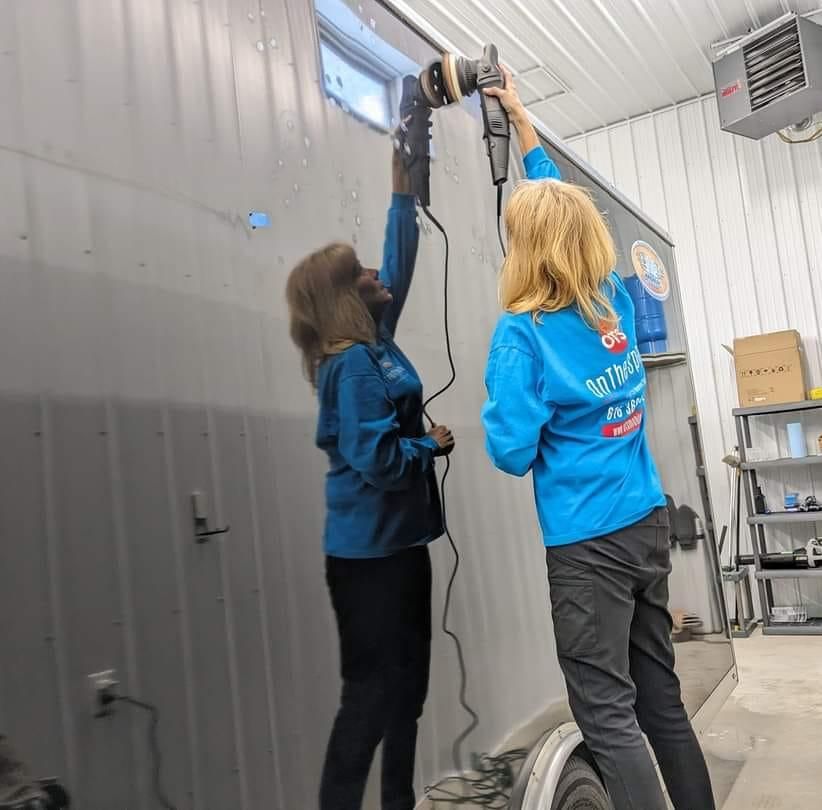
There are times when a controlled studio beats any driveway. Multi-layer ceramic coating on a black vehicle in humid, dusty conditions is one. Extensive paint correction that requires long machine time and stable lighting is another. PPF (paint protection film) installation is a shop job, period. A good mobile service will tell you when a shop is smarter. Some companies operate both to match the job to the environment, and that honesty protects your outcome.
Maintenance after the service: keeping gains without fuss
The first wash after a detail reveals how well the protection and process worked. If the paint beads water and dries with minimal spotting, maintenance will feel easy. Use a pH-neutral shampoo, a clean mitt, and separate wash media for the lower, dirtier panels. Skip automatic brushes. If you received a ceramic coating, gentle toppers every few months can renew slickness. For interiors, a simple microfiber wipe of high-touch areas every one to two weeks prevents buildup that demands stronger cleaners later. On wheels, rinse thoroughly before a contact wash to cool and soften dust.
For headlight restoration, avoid harsh chemicals at the self-serve wash and reapply a light, compatible sealant periodically if recommended by the technician. For RVs and boats, set a schedule that respects sun exposure and storage conditions, not just calendar time.
Common misconceptions and how professionals handle them
Two myths show up often. First, that ceramic coating makes a car scratch-proof. It does not. It increases resistance to micro-marring and environmental staining, but it will not stop a rogue shopping cart. Second, that interior dressing should be shiny to be clean. Gloss often means residue or silicone. A clean, protected interior should look factory-correct, with a matte or soft-satin finish and no greasy feel.
Another subtle point: clay bars pull bonded contaminants, but they are not a correction tool. Clay will not remove scratches and can add light marring if used without lubrication or on dirty paint. That is why claying is followed by at least a light polish when the goal is perfection.
How pros communicate limits and options
Trust grows when a detailer says no. No, they will not polish matte paint. No, they will not coat over uncorrected water spotting that etches deep into the clear without a discussion of the risks. No, they will not extract a flooded carpet without addressing underlying odors and potential mold. Clear limits protect the vehicle and your satisfaction. Good communication also includes before-and-after photos, direct notes on trouble spots, and realistic guidance on how to keep the finish healthy.
On the Spot Mobile Detailers: lessons learned from the field
Over many seasons, On the Spot Mobile Detailers has refined a few practices that consistently improve outcomes. Lighting is one. Portable, color-accurate lights reveal haze, buffer trails, and high spots in coatings that daylight can hide. Another is panel isolation during correction. Taping adjacent trim reduces staining and speeds clean-up. A third is product minimalism. Carrying a shorter list of proven cleaners and polishes, each with clear roles, beats a trunk full of overlapping bottles that invite mistakes. The team also treats schedule buffers as non-negotiable. A sixty-minute cushion absorbs weather, a stuck lug cover on a delicate wheel, or an interior spill that was worse than described, without cascading into rushed work on the next appointment.
Clients rarely notice these choices, but they feel the results. The car looks better, the driveway stays tidy, and the service runs on time.
Choosing the right level of service for your situation
Your use case sets the map. If you drive 15,000 miles a year, park under maples, and take occasional road trips, aim for quarterly decontamination, a mid-term sealant or light ceramic topper, periodic wheel de-iron treatments, and yearly interior extraction where needed. If you own a marine craft in brackish water, accept that marine detailing is a maintenance rhythm, not a one-off fix. If your RV sits under the sun at storage, plan for oxidation control and gasket care well before a big trip. If you are prepping a vehicle for sale, a strong single-stage polish, headlight restoration, and a focused interior sanitation often return more value than chasing every rock chip.
A short, honest conversation with a pro can save you from buying services you do not need. A minivan shuttling kids and sports gear benefits more from stain removal and odor control than a painstaking chase of micro-swirls under the C-pillar. Conversely, a collector car’s market value can hinge on the quality of its paint correction and proper protection.
Final thought: what quality feels like
When a mobile detailing appointment goes right, you notice the lack of drama. Tools are laid out neatly. The process has a rhythm. The tech explains choices without jargon. Your paint feels slick but not waxy. The interior looks factory-fresh, not perfumed. Wheels rinse easier the next weekend. You do not see splatter on the driveway or chalky residue on your trim. And a week later, when a sudden shower beads and rolls off cleanly, you remember why you booked the service instead of another hurried run through an automatic wash.
That, at its core, is what to expect from a professional service in auto detailing or car detailing across vehicles and environments. The craft shows in restraint as much as in gloss. Paint correction is measured, ceramic coating is intentional, headlight restoration is built to last, interior coating is thoughtfully applied, marine detailing respects the elements, RV detailing respects the scale, and wheel coating respects the heat and grime that wheels live with. When all of that meets you on your own driveway, delivered by a team that treats your property and your time with care, mobile detailing proves its worth.